
Photo by Vidal Balielo Jr
You don’t have to knock down walls to make a room feel bigger. From painting the walls white to adding mirrors, there are many design tricks to create the illusion of space. Here are 10 hacks to help make a small room feel spacious.
Paint the walls white
While dark colours can make a room feel smaller, lighter colours can make a room feel bigger. Painting a room white is particularly effective at adding the illusion of space – white reflects more light than any other colour, which helps to create a sense of openness.
Reduce clutter
The more stuff that is crammed into a room, the smaller it will seem. Creating empty spaces in rooms can help to make them feel more spacious. Avoid cluttering up surfaces with ornaments, and allow some bare space on walls.
Embrace mirrors
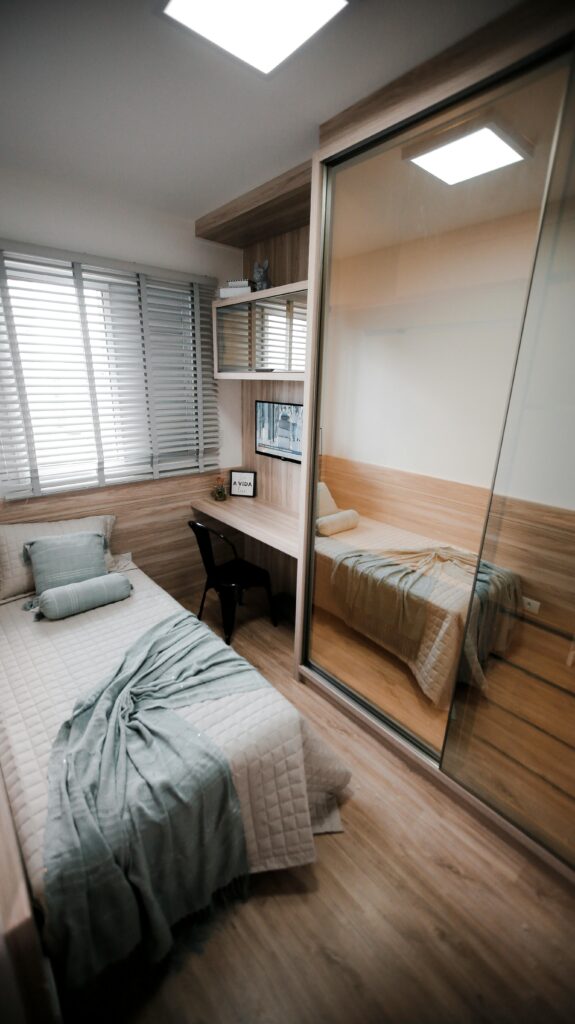
Mirrors create a sense of depth by reflecting back the room. Large mirrors are particularly effective at creating this illusion. They can also help to make a room feel brighter by helping to reflect light.
Add depth with murals and paintings
Murals and paintings (particularly of landscapes) can also add a sense of depth to a room, giving the impression of extra windows. Even certain types of wallpaper can have this effect.
Consider the direction of lines and stripes
Horizontal and vertical lines and stripes can help to elongate rooms. Choose vertical lines/stripes to add height and horizontal lines/stripes to add width. Everything from stripy wallpaper to floorboards can be used for this effect.
Hang up blinds, not curtains
Curtains can sometimes shrink a small room because they take up extra room on either side of the window frame. Blinds sit inside the window and free up empty space either side. Choose vertical blinds to make a room feel taller and horizontal blinds to make a room feel wider.
Choose furniture on legs
Visible floor space can have a big impact on how large a room feels. By putting furniture on legs, you can create more visible floor space and make a room feel more spacious.
Opt for low furniture to add height
Choosing low furniture can meanwhile help to add a sense of height to a low-ceilinged room. Low beds are particularly effective for low-ceilinged lofts, while low sofas and side tables are great for adding height to low-ceilinged living rooms.
Use sconce lights in bedrooms
In bedrooms, sconce lights can be installed onto the wall above a bed instead of relying on bedside cabinets with table lamps. This can free up space either side of a bed to help make a small bedroom feel bigger. Adding floating shelves instead of shelving units can have a similar effect by opening up floor space.
Avoid wall-to-wall furniture
Large furniture that spans wall to wall can make a room feel overly tight and cramped. Always make sure there are gaps on either side of furniture. This is why large sectional sofas should typically be avoided in small rooms – if they touch both walls, they can often make a room feel cramped. A smaller sofa can open up space on either side and feel cosier.



Leave a Reply