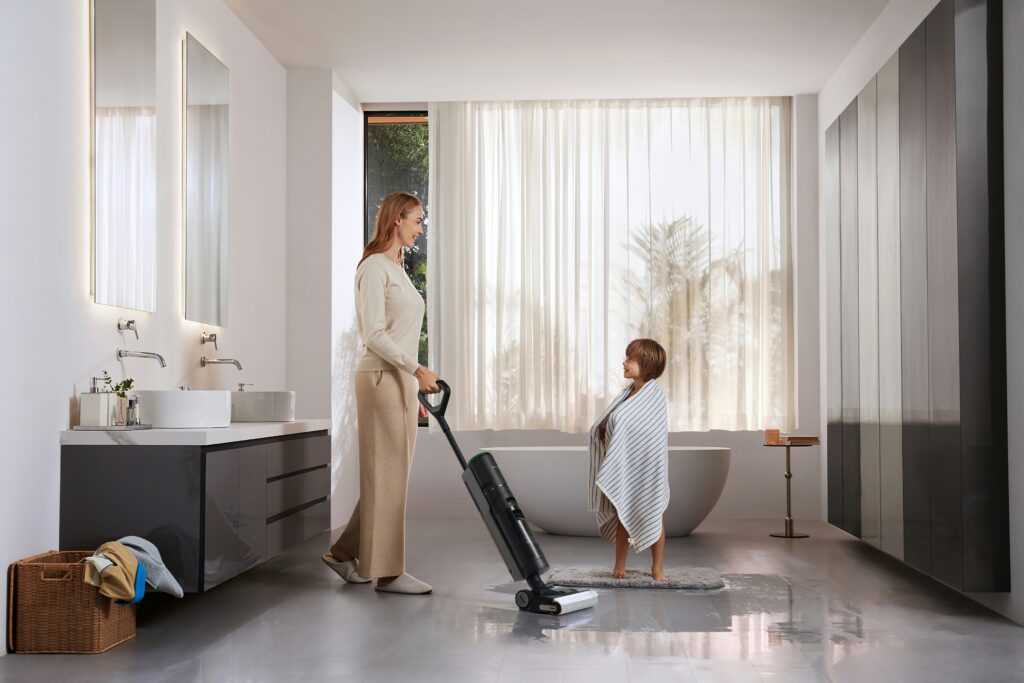
Photo by Dreame Vacuum Cleaner on Unsplash
A family bathroom can work well for adults while still presenting awkward reaches, slippery surfaces and tempting cupboards for a toddler. Looking at the room from your child’s perspective can reveal small changes that make bath time calmer and everyday routines easier.
Young children still need close supervision around water, even after you’ve made practical safety improvements. These updates support that supervision by reducing common hazards and helping toddlers take part in simple tasks such as washing their hands or putting away toys.
Seeing the Space from Their Eye Level
Crouch down to toddler height and scan the bathroom from the doorway. You may spot reachable cleaning products, sharp cabinet handles or a toilet lid that’s easy to lift. The mirror, towel and soap may also be too high for a child who’s learning to manage basic routines.
Move toiletries and cleaning supplies into a high or locked cupboard, then secure low cabinets. The guidance on childproofing the bathroom also recommends addressing hazards such as unsecured toilets and accessible electrical items.
A stable step stool can help at the sink, but check that its feet stay firmly planted on damp flooring. Keep cords out of reach and install covered storage for razors, medicines and small items that could become choking hazards.
Faucet Guards and Temperature Checks
Hot water can injure delicate skin quickly, so test the temperature before your toddler gets into the tub. Use the inside of your wrist or a bath thermometer, then swirl the water to remove hot spots. Sanford Health’s toddler bathroom safety tips recommend setting the water heater no higher than 120°F to lower the risk of scalding.
A padded faucet cover provides a softer surface if a child slips or leans forward during play. Choose one that fits securely and doesn’t block the water flow.
Turn faucet handles away from curious hands where possible. Fill the bath before your child gets in, check it again and keep them within arm’s reach for the entire bath.
Adding Discreet Traction Where It Counts
The tub floor often becomes slippery once shampoo, conditioner and bath products mix with water. Add traction to the areas where your toddler sits, stands or climbs out. Adhesive bath stickers can create grippier points across a smooth tub surface without covering the whole base.
Start with a clean, dry surface and follow the fitting instructions closely. Pay attention to spacing, since wide gaps can leave a foot landing on a slick patch. Press down the edges and allow the adhesive to set before using the tub.
Check each sticker during your regular bathroom clean. Replace any piece that curls, shifts or traps residue around its edges. A washable non-slip mat outside the tub can also give wet feet a steadier landing.
Storage Solutions for Soaked Toys
Bath toys need airflow after use. A closed plastic box holds moisture around toys and encourages grime to build up, particularly inside squeezable figures with small holes.
Choose a mesh bag, draining basket or open caddy that can hang beyond your toddler’s reach. Rinse toys with clean water, shake out as much moisture as possible and spread them loosely instead of piling them together. Keep the container away from the toilet and make sure it doesn’t obstruct access to grab rails or faucet controls.
Review the collection every few weeks. Discard cracked toys and any item that can’t be cleaned inside. Fewer toys also make it easier to rinse the tub and notice loose traction stickers or other maintenance issues.
A toddler-friendly bathroom still depends on an adult staying close, but thoughtful details make that supervision much more manageable. Once the water has drained, leave the tub clear, hang the toys to dry and return medicines or toiletries to their secure storage spots. That simple reset prepares the room safely for its next busy visit.








Leave a Reply