
Image Credit: Unsplash
Family holidays feel far easier when everyone has enough room to eat, sleep and unwind in their own way. A flexible living space gives parents somewhere to sit after bedtime, lets children follow familiar routines and removes some of the pressure that comes with sharing one small room. This can be especially helpful during city breaks, when busy days often leave the whole family needing a quiet reset.
The practical benefits begin long before you arrive. Accommodation with a kitchen, separate sleeping areas and useful hotel services can simplify packing, reduce food costs and make each day less dependent on fixed timetables.
The Strain of Cramped Hotel Bedrooms
A standard hotel bedroom may work perfectly well for one night, but it can feel very different after several days with children. Suitcases take over the floor, wet coats end up across chairs and every snack seems to create another pile of crumbs or packaging. Once a travel cot or extra bed has been added, there may be little space left for playing or getting ready. To help manage this spatial squeeze during family trips, parents can adopt strategies similar to overhauling bedroom storage organisation before setting off.
Bedtime brings another challenge. If everyone shares the same room, adults often have to whisper in the dark from 8 pm or sit in the bathroom to avoid waking a light sleeper. Older children may struggle to settle when a younger sibling is crying, whilst parents lose the chance to plan the next day or enjoy a quiet cup of tea.
Look carefully at the floor plan before booking. Room descriptions such as “family room” don’t always explain how the beds and living areas are arranged. Check the following details:
- Whether a bedroom has a door that closes
- Where travel cots or extra beds will be placed
- How much storage is available
- Whether the table can seat the whole family
- If there is space for a pushchair without blocking the walkway
Flexible accommodation also helps on days when plans change. A child who needs an afternoon nap can rest in the bedroom whilst everyone else reads, plays or watches television in the living area. That small amount of separation can prevent tiredness from setting the mood for the whole evening.
Freedom to Cook on Your Own Schedule
Eating out three times a day sounds like part of the holiday fun, but it can soon become tiring and expensive. Children may wake hungry before cafés open, need lunch earlier than expected or reject a restaurant meal after waiting half an hour for it to arrive. A private kitchen gives you another option without requiring every meal to become a cooking project.
This is where apartment-style accommodation becomes particularly useful. Families comparing self-catering apartments in Edinburgh, for example, can consider serviced spaces with equipped kitchens alongside practical hotel-style features. That combination suits a city break where you may want breakfast at home, lunch while sightseeing and an evening meal nearby.
You don’t need to pack the weekly meal plan. A few simple foods can cover the moments when restaurant timings don’t fit family life. Pick up cereal, yoghurt, fruit and bread on arrival, then add pasta or another quick evening meal in case somebody is too tired to go out. If your child has allergies, check what cooking equipment is provided and bring clearly labelled essentials that may be difficult to find locally.
A kitchen can also protect familiar routines. Toddlers can have their usual warm milk before bed and early risers can eat without waiting for the rest of the building to wake up. Parents of babies gain a convenient place to clean bottles, store milk and prepare food at a suitable temperature.
Set one simple boundary to keep self-catering from becoming a chore: choose which meals you’ll prepare before the trip. Breakfast and one relaxed evening meal may deliver all the flexibility you need, leaving plenty of opportunities to enjoy local cafés and restaurants.
Separate Sleeping Zones for Better Rest
Sleep affects almost every part of a family break. A late night may be manageable for one evening, but several disrupted nights can lead to tears over breakfast, less patience in queues and abandoned afternoon plans. The NHS guidance on children’s sleep recommends a predictable bedtime routine, and a separate bedroom makes that routine much easier to maintain away from home.
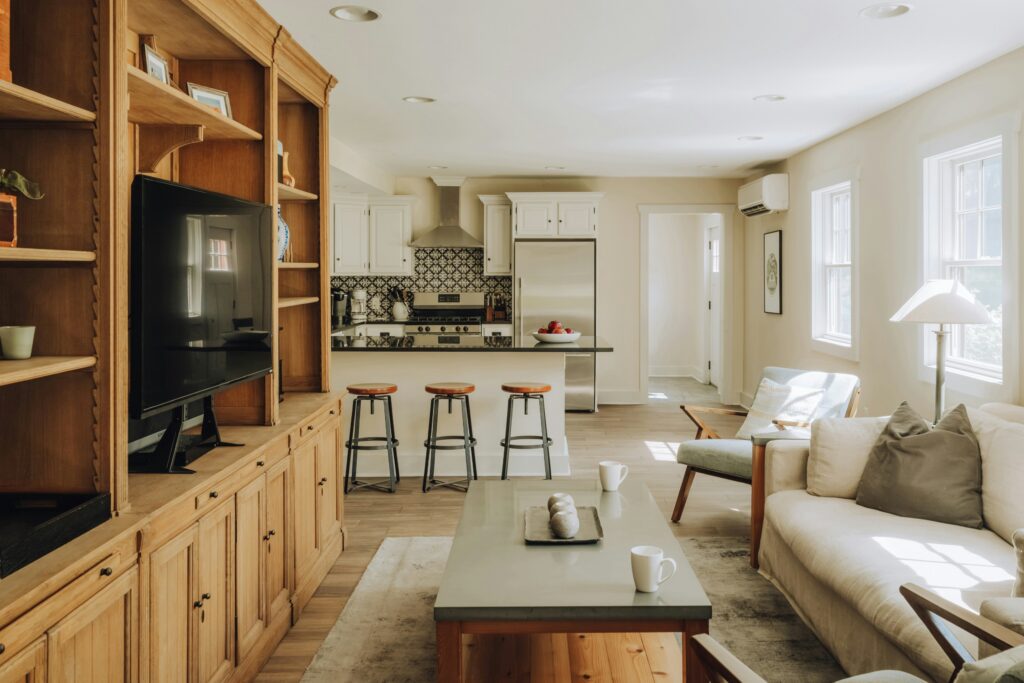
Think in terms of sleeping zones, not simply the number of beds. A one-bedroom apartment may give parents the bedroom whilst older children use a sofa bed in the living room. Another family may place a baby in the bedroom and use the living space after bedtime. The best arrangement depends on who wakes first, who is most easily disturbed and which family members need darkness or quiet.
Ask about blackout curtains, internal doors and the position of sleeping areas before you book. A sofa bed beside the kitchenette may be less practical if parents plan to make an early breakfast. Likewise, an open-plan studio may look spacious in photographs but still require everyone to follow the same bedtime.
Bring a few compact items that signal bedtime without filling a suitcase. A favourite story, familiar pyjamas and a small night light can make an unfamiliar room feel less strange. Download white noise or bedtime audio in advance so it works without a strong internet connection. Keep the first evening fairly quiet too, as children often need time to settle after travelling.
Adults benefit from separation as well. Once children are asleep, you can talk at a normal volume, read or organise bags for the morning. A more settled night gives the whole family a better chance of enjoying the plans you’ve paid for.
Balancing Hotel Perks with Home Comforts
Apartment-style space works best when it comes with services that remove everyday hassle. A 24-hour reception can help if travel delays push arrival into the evening, whilst luggage storage makes the first and last days more useful. Online check-in may also reduce time spent completing forms with tired children waiting beside you.
Families increasingly expect hospitality to account for how they actually use accommodation. Examples of family-friendly hospitality show how thoughtful layouts and welcoming shared spaces can serve parents and children without making the experience feel overly formal. The priority is practical design: somewhere to sit together, enough storage and staff available when help is needed.
Flexible space can serve other needs too. A parent may have to answer a work call during a longer stay, or a teenager may need a quiet table for schoolwork. The rise of hotel working spaces reflects how accommodation now has to support more than sleeping. For families, a dining table and separate room can stop a brief task from taking over everybody’s day.
Before confirming a booking, list the three facilities your family will genuinely use. These might be a lift for the pushchair, laundry access for a week-long stay or a fitness room for an early workout. Then check the less exciting details, including cleaning arrangements, kitchen equipment and any charges for cots or late check-out.
The right balance leaves you free to treat the accommodation as a temporary home without carrying all the work of home with you. After a full day exploring, there is real comfort in closing the bedroom door, putting tomorrow’s breakfast in the fridge and sitting down together with enough room for everyone.h*










Leave a Reply