
Image Credit: Unsplash
Warm nights can make it harder for children to settle, especially when bedrooms hold on to heat long after the sun has gone down. Babies and young children also rely on adults to adjust their clothing and sleeping environment, so a few practical changes can make bedtime safer and more comfortable.
Start preparing the room before bedtime, then keep your child’s usual evening cues in place. A cooler room, gentle airflow and light cotton clothing can all help without introducing a completely new routine just because the weather has changed.
Keep Bedtime Routines Relaxed and Calm
Stick to a familiar sequence, even if bedtime shifts slightly on a particularly hot evening. A simple routine might include a lukewarm bath, pyjamas, milk or water, a story and a cuddle. Familiar steps tell your child that sleep is coming, while the calm pace gives their body time to wind down.
The Cleveland Clinic’s advice on establishing a baby bedtime routine suggests starting with a short and consistent pattern. Try to keep the final 20 to 30 minutes quiet, with dim lighting and no energetic games. If your toddler regularly resists going to bed, these practical ideas for avoiding toddler bedtime battles can help you preserve those familiar boundaries.
Avoid a very cold bath immediately before bed. Lukewarm water feels refreshing, but chilly water may leave a child uncomfortable and alert. Dry them thoroughly, dress them in light nightwear and offer a drink if they’re old enough to have water overnight.
Blackout blinds can keep out late evening light, though they may also trap warmth when closed all day. Use them while direct sunlight reaches the window, then open them once the outdoor temperature drops. If bedtime needs to move back by 15 or 20 minutes, keep the same order of events so the change doesn’t feel disruptive.
Regulate Nursery Temperatures Naturally
Check the room itself instead of relying on how warm the hallway feels. A basic room thermometer placed away from the window, cot and radiator will give you a more useful reading. The temperature can change during the night, so take one reading in the late afternoon and another shortly before bedtime until you understand how the room behaves.
Close curtains or blinds when sunlight is hitting the glass. Once the air outside becomes cooler than the air indoors, open windows on opposite sides of the home where it’s safe to do so. This creates cross-ventilation and helps release stored heat. If insects or airborne pollen make open windows impractical, custom-made magnetic fly screens for windows can provide a removable barrier while allowing fresh air to enter.
A fan may help circulate air, but don’t aim it directly at your baby or young child. Point it towards a wall or across the room and keep the cable completely out of reach. The guidance on baby sleep during heatwaves also recommends keeping daytime sunlight out and encouraging air to move around the sleeping space.
Never drape a damp towel, muslin or blanket over a cot, pram or fan. Fabric can restrict airflow around a baby and may create an unsafe sleeping environment. Keep the cot clear and follow your usual safe sleep arrangements.
Keep Windows Open Without Inviting Bugs
An open window is often the simplest way to cool a bedroom after sunset, but mosquitoes, flies and moths can quickly disturb a sleeping child. Look for gaps around the frame and decide how far the window can open safely. Any window that a mobile baby or toddler could reach needs an appropriate restrictor, and furniture should remain well away from the sill.
Turn bedroom lights off before opening the window because bright light can attract insects. A landing light may give you enough visibility while you finish the bedtime routine. Once the room is ready, close the door if that helps stop bugs entering from brighter parts of the house.
Keep the area around the window clear of standing water, uncovered bins and overwatered plant pots. These can encourage insects close to the home. If you use a screen, check its edges regularly for small gaps and clean the mesh according to its care instructions. Fine dust and pollen can collect on it over time and reduce airflow.
Think about noise as well. If an open window lets in traffic, neighbours or early morning birdsong, use steady background sound at a low volume. Place the device well away from the cot and keep cables inaccessible. On nights when outdoor noise repeatedly wakes your child, cool the room thoroughly before bedtime, then reduce the window opening once they’re asleep and the indoor temperature has fallen.
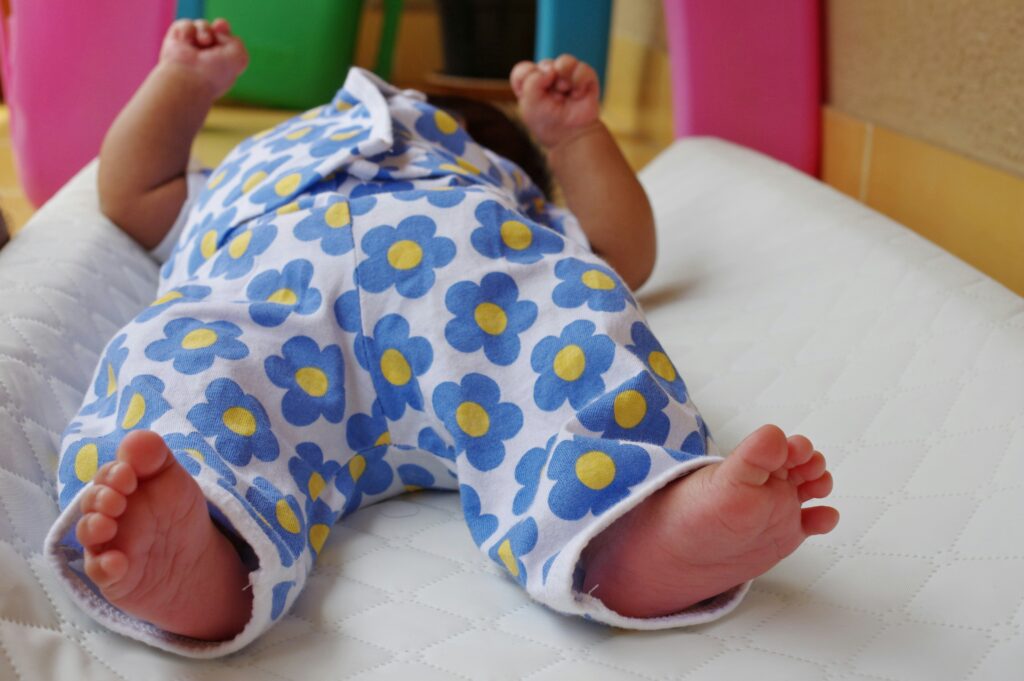
Image Credit: Unsplash
Choose Breathable Cotton Nightwear
Dress your child according to the temperature in their bedroom, not the temperature outside earlier in the day. Lightweight cotton is useful because it allows air to circulate and absorbs moisture. Avoid thick sleepsuits, fleece fabrics and unnecessary layers during warm weather.
For babies, check the tog rating on sleeping bags and follow the manufacturer’s temperature guide. Some warm nights may call for a low-tog sleeping bag with a short-sleeved bodysuit, while very hot rooms may require fewer layers. The Millpond Sleep Clinic guide to keeping a baby cool at night offers further examples, but individual products vary, so always check the label on the sleeping bag you own.
Feel your baby’s chest or the back of their neck to judge their temperature. Hands and feet often feel cooler and aren’t a reliable guide. Damp hair, flushed skin, a hot chest or unusual restlessness may mean they need a layer removed and the room needs more ventilation. Never place ice packs or frozen bottles in a cot.
Older children can usually tell you if they feel too warm, although they may still insist on their favourite heavy pyjamas. Offer two suitable choices, such as a loose cotton T-shirt with shorts or a lightweight cotton nightdress. Age-by-age sleep tips can also help you match bedtime expectations to your child’s stage of development.
Keep a spare set of light nightwear nearby in case your child wakes sweaty. A quick change in dim light is less disruptive than searching through drawers at 2 am. You can also leave fresh bedding ready in another room in case a sheet becomes damp.
Warm nights often become easier once you know when the bedroom starts to cool and which clothing combination suits your child. Check their neck or chest before you go to bed yourself, then make one small adjustment if they feel hot. That quiet late-evening check can prevent discomfort without waking them fully.










Leave a Reply