
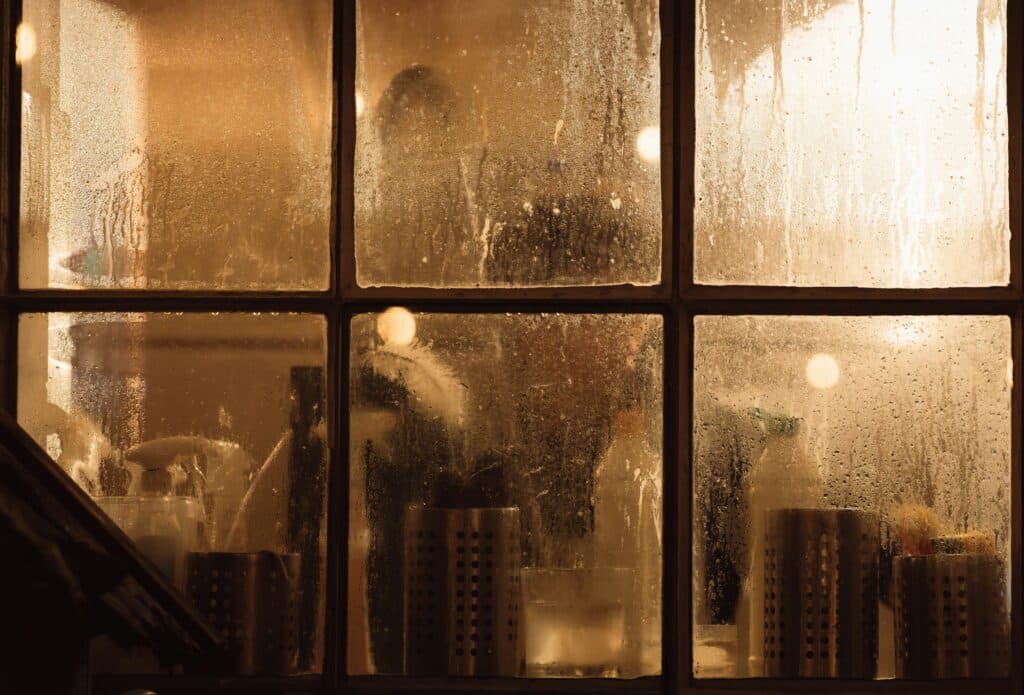
Have you ever wondered why you have a lot of condensation in your home? If so, then this educational post is for you. We look at why little water droplets can build up on ceilings, walls, and windows over time and what you can do about it.
Usually, it’s a problem in the colder months when indoor humidity is high, but it can also be something that affects you throughout the year. The more persistent and longer it goes on, the more of a problem it creates. It can damage your drywall or lead to mold. Here are some of the top reasons why you might have too much condensation in your home.
High humidity levels indoors
The first reason you might have condensation is if you have high humidity levels indoors. Too much moisture when the dew point is low can lead to condensation on most surfaces.
Unfortunately, the average person creates about three pints of water vapor per day. This by breathing, and this can then find its way onto surfaces in the home. Additional sources of moisture are cooking, showering, and dishwashing. Again, these can allow multiple points of water to enter the air. If humidity stays above around 50%, then condensation can form quite easily in the home.
The best way to deal with this problem is to put dehumidifiers in problem locations. For example, you might want to put a dehumidifier on the landing outside of your bathroom to remove some of the moisture that comes out after you shower.
Improper roof ventilation
Another problem that you might have is trapped air in your home. If it can’t circulate through the attic and leave with fresh air coming in from the ground floors, then that’s a problem.
The best way to deal with this is to improve your roof ventilation. The more easily air can circulate, the less likely it is that humidity will build up. This is because the humidity of the air inside your home can more easily equilibrate with the humidity outside of it.
Indoor/outdoor temperature differences
Another issue can be indoor/outdoor temperature differences. This is more likely to lead to condensation on your property. For example, suppose you’ve got cold outdoor air and warm, humid indoor air. What happens is that when the warm humid air makes contact with windows and walls which have been cooled down by the outside low temperatures, it makes it easier to form droplets. These then become thicker and more intense over time and eventually drip down.
The best way to deal with this problem is to insulate your walls and use double-glazed windows. This reduces the temperature differential between the inside and the outside of the property.
Drying clothes indoors
Finally, a big no-no if you want to avoid condensation is drying clothes indoors. If you hang wet laundry inside, all of that moisture gets into the atmosphere and starts to circulate. This is particularly problematic when windows are closed. If you have to dry clothes inside because you don’t have space anywhere else, then always open the window.








Leave a Reply